The 52-Week Savings Challenge: How to Actually Finish It
The classic challenge promises $1,378 saved in a year. The problem is not the math. It is the psychology.
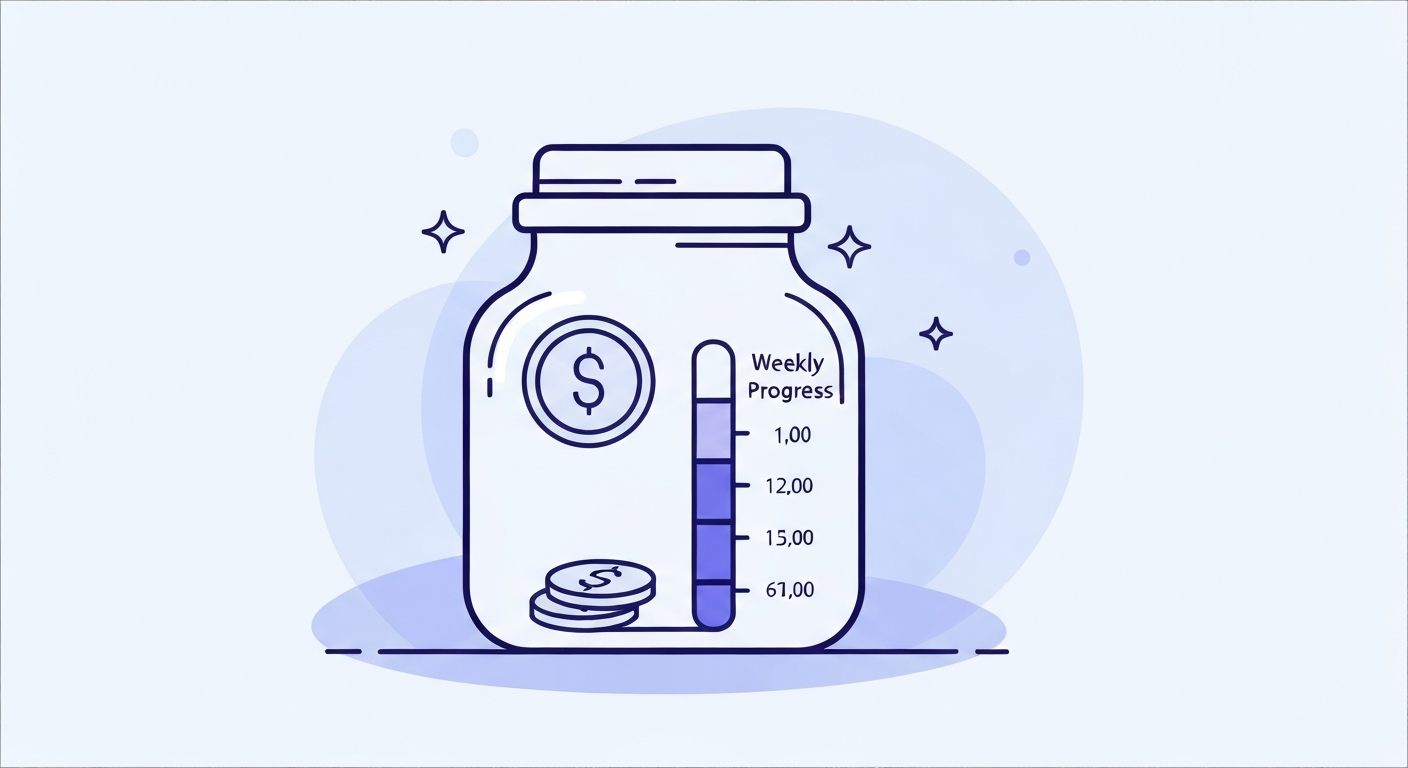
The 52-week savings challenge is one of the most popular financial challenges on the internet. Week one, save $1. Week two, save $2. Week three, $3. By week 52, you are putting away $52 in a single week. At the end of the year, you have $1,378 in savings According to Federal Reserve data, this aligns with broader consumer-finance trends.
It sounds simple. It is simple. And yet, research from behavioral finance studies suggests that over 70% of people who start the challenge abandon it before reaching week 30. The final quarter of the year is where the amounts get serious ($40-52 per week), and it collides perfectly with holiday spending season. Most people designed themselves a system that gets hardest exactly when money is tightest.
That does not mean the challenge is flawed. It means the standard version needs adjustments. Here are approaches that dramatically improve your odds of finishing.
The Reverse 52-Week Challenge
Start with week 52 ($52) and work backward. By the time December arrives, you are only saving $1-4 per week, which barely registers during the most expensive time of year. January and February, when post-holiday spending naturally drops, absorb the larger amounts much more easily.
Psychologically, this also front-loads the sense of accomplishment. Saving $52 in your first week feels like a significant act. By month three, you have already saved over $600, which creates momentum. The traditional version gives you $78 after three months, hardly motivating enough to sustain the habit.
The Flexible Weekly Challenge
Instead of saving a fixed amount each week in sequence, print out (or use an app to display) all 52 amounts from $1 to $52. Each week, choose any unchecked amount based on what you can actually afford. Flush week after a side gig payment? Cross off $48. Tight week because of a car repair? Grab the $2.
You still save $1,378 by year-end, but the flexibility eliminates the main reason people quit: rigid amounts that ignore the reality of fluctuating income and expenses. This approach works especially well for freelancers, gig workers, and anyone with variable pay.
The Biweekly Paycheck Method
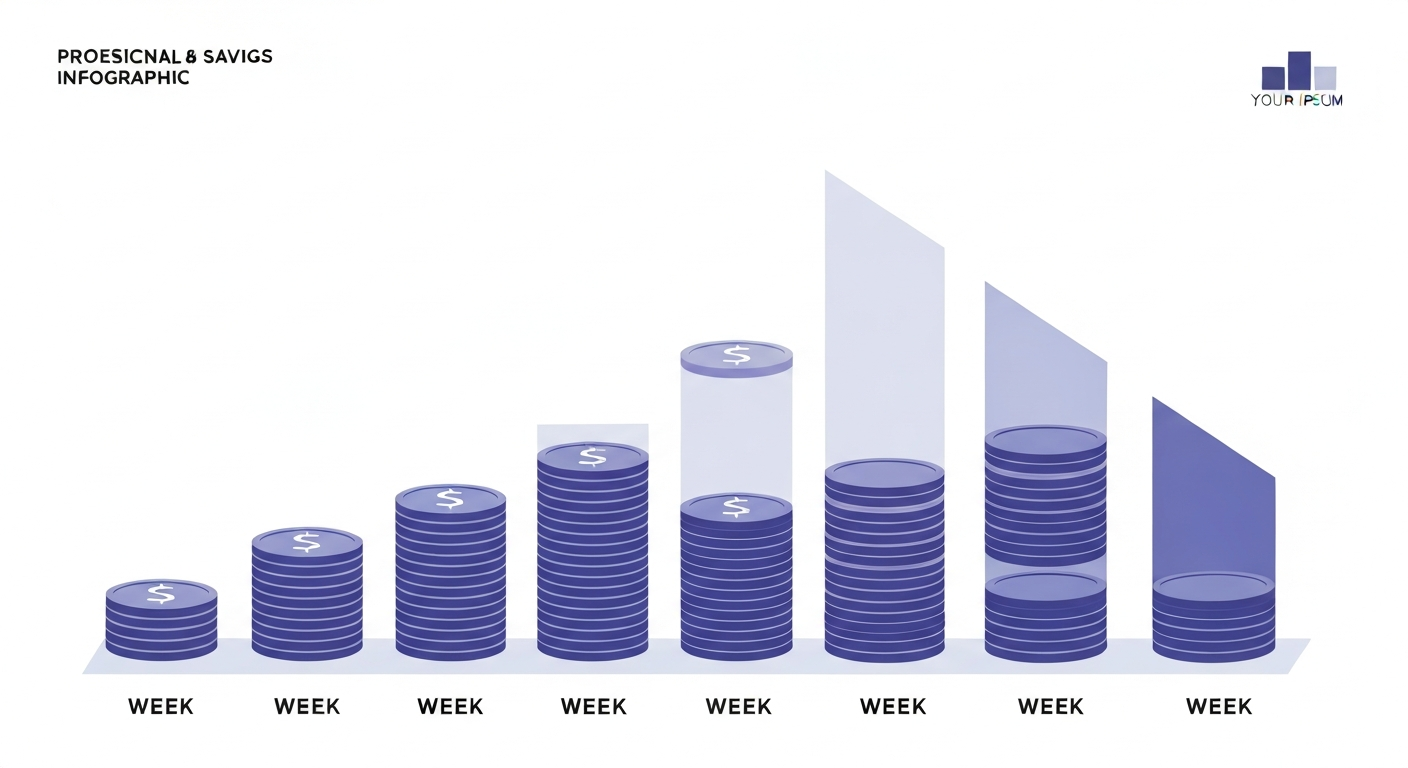
Most Americans get paid biweekly, not weekly. Trying to save weekly when you get paid every two weeks creates an unnecessary friction point. Instead, combine two weeks of savings into one biweekly deposit. If you are doing the reverse method, your first biweekly deposit would be $52 + $51 = $103, and your last would be $2 + $1 = $3.
Better yet, automate the transfer to happen on payday. When the money moves before you see it in your checking account, it never feels like a sacrifice. Behavioral economists call this "pay yourself first," and it works because it removes the decision point entirely.
Pair It with a Tracking System That Motivates
A printable chart on the refrigerator works for some people. But if you are the type who responds to progress bars, streaks, and achievements, a gamified tracking system will keep you engaged far longer than a piece of paper.
This is the principle behind apps like kNexo, which turns savings challenges into interactive missions with visual progress tracking. When checking off a week triggers a small dopamine hit through achievement notifications and progress animations, the habit loop strengthens. You are not just saving money because you should. You are saving because the act itself becomes rewarding.
What to Do with Your $1,378
Deciding the purpose of your savings before you start dramatically increases completion rates. Research from the University of California found that people with specific savings goals saved 73% more than those saving for abstract reasons like "building a cushion."
Strong candidates for your $1,378:
- Start an emergency fund. If you have no emergency savings, $1,378 covers roughly one month of essential expenses for a single person. That is the difference between a car repair being an inconvenience and a financial crisis.
- Pay off a specific debt. Identify a credit card balance or personal loan close to $1,378 and target it. Eliminating a monthly payment creates a permanent improvement to your cash flow.
- Fund a specific experience. A vacation, a certification course, a new laptop for a side business. Concrete goals attached to specific amounts are far more motivating than abstract savings targets.
Scaling Up: The $5 and $10 Versions
Once you have completed the standard challenge, consider the multiplied versions. The $5 version ($5 in week one, $10 in week two, up to $260 in week 52) yields $6,890. The $10 version produces $13,780. These are obviously more aggressive, but if your first year proved you can maintain the habit, scaling up becomes realistic.

The key insight: do not jump to the $10 version immediately. Build the habit with the standard challenge first. Treat it like progressive overload in strength training. You do not start with the heaviest weight. You build tolerance, prove consistency, and then increase the load.
Common Mistakes That Kill the Challenge
Using the savings account for emergencies during the challenge. If you dip into your challenge savings to cover an unexpected expense, the psychological blow is disproportionate to the dollar amount. Open a separate savings account specifically for the challenge so the balance only ever goes up.
Not telling anyone. Accountability matters. People who share their financial goals with at least one other person complete them at significantly higher rates. A partner, friend, or online community creates gentle social pressure and someone to celebrate milestones with.
Treating missed weeks as failure. If you miss a week, you have not failed the challenge. You have missed a week. Grab the amount the following week (or split it across two weeks) and keep going. The all-or-nothing mentality kills more savings challenges than actual inability to save.
Make It Automatic, Make It Stick
The best version of the 52-week challenge is one where you barely have to think about it. Automate the transfers, use an app that tracks your progress visually, and assign a concrete purpose to the end result. Whether you choose the standard, reverse, or flexible approach, the goal is the same: prove to yourself that consistent small actions produce meaningful results.
And once you have that proof, everything else in your financial life becomes easier.
Frequently Asked Questions
Where should I keep my 52-week challenge savings?
Use a separate high-yield savings account (HYSA) that you do not use for daily expenses. Many online banks offer accounts with no minimum balance and 4-5% APY. Keeping it separate prevents accidental spending and lets you earn interest on your growing balance throughout the year.
Can I do the 52-week challenge with a low income?
Absolutely. The first few months of the standard challenge require very small amounts ($1-10 per week). If even that feels tight, try a modified version: save your spare change daily, or commit to a flat $5 per week ($260 per year). The habit of regular saving matters more than the specific dollar amount.
What if I get paid monthly, not weekly?
Combine four weeks of savings into one monthly transfer. For the standard challenge, month one would be $1+$2+$3+$4 = $10. Month twelve would be $49+$50+$51+$52 = $202. Automating this monthly transfer on payday makes it seamless regardless of pay frequency.
Is there an app that tracks the 52-week challenge automatically?
Several apps support savings challenges with automatic tracking. kNexo, for example, lets you log savings via WhatsApp and tracks your challenge progress with visual milestones and achievements. Look for apps that combine tracking with motivation features to increase your odds of finishing.
Ready to take control of your finances?
Join the kNexo waitlist for early access to AI-powered savings challenges and money management.
Create free account