Best Budgeting Apps for Teens in 2026: Teach Money Skills Early
Your teenager can navigate TikTok, Discord, and five streaming services simultaneously — but ask them to track a $20 allowance and watch the confusion set in. These apps fix that gap with tools teens will actually use.

Only 17 states require personal finance courses for high school graduation. That means 66% of American teens enter adulthood without any formal financial education. Meanwhile, the average college student graduates with $37,574 in student loan debt and an additional $2,000+ in credit card debt accumulated during school. A teen budgeting app cannot replace systemic education reform, but it can fill the gap between "your parents told you to save" and actually knowing how to manage money. The best apps for teens combine real tracking tools with engagement mechanics that compete with social media for attention. For broader family finance tools, our family budget app guide covers options for the whole household.
Why Teen Budgeting Needs Different Tools
Adult budgeting apps assume you have a salary, bills, and financial responsibilities. Teens have different inputs: allowances, birthday money, part-time job earnings, and maybe a Venmo balance from splitting lunch with friends. The amounts are smaller but the learning opportunities are identical. A teen who tracks $50 per week in spending develops the same neural pathways as an adult tracking $5,000 per month. The challenge is engagement. Adults budget because they have to — rent is due regardless. Teens need a reason to open the app that goes beyond parental nagging. That is where gamified budgeting becomes specifically valuable for the teenage demographic.
Best Apps for Teen Budgeting
kNexo — Best for Teens Within a Family Plan
kNexo's Premium plan ($29.90/month billed annually) supports up to 6 family members, making it ideal for adding teens to a household budget without needing a separate subscription. Each teen gets their own profile with individual privacy controls — they see their spending, savings goals, and missions without accessing parental finances. Parents see aggregated family data and can set shared goals.
The gamification engine is what separates kNexo from adult-oriented budget apps:
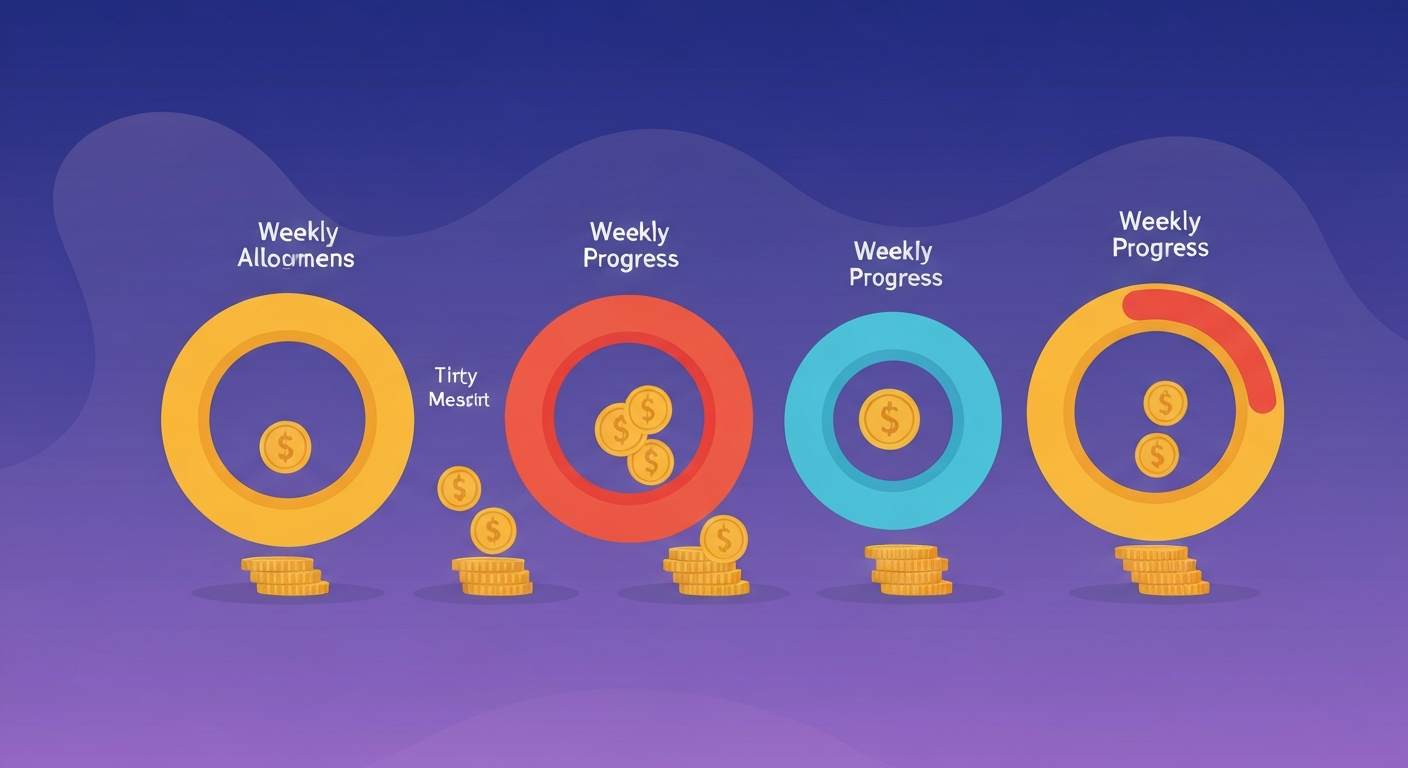
- Missions: Weekly challenges like "Save $10 from your allowance" or "Log every purchase for 7 days straight"
- Streaks: Daily logging streaks with visual progress indicators
- Achievement badges: Earned for milestones like "First $100 saved" or "30-day tracker"
- WhatsApp logging: Teens already live on WhatsApp — sending "lunch $8" to log an expense takes 3 seconds
The Free tier works for a trial run: **unlimited transactions, unlimited categorizations** per month with no credit card. If the teen engages with it for a month, upgrading to Family adds family sharing and unlimited features.
Greenlight — Best Debit Card for Teens
Greenlight combines a prepaid debit card with a parental control app. Parents load money, set spending controls by store or category, and get real-time notifications when the card is used. Plans start at $5.99/month for one child and include investing features on higher tiers. The advantage: teens use a real card in real stores, which is more practical than manual expense entry. The limitation: Greenlight is a card product with budgeting features, not a budgeting app with card features — the analytics and goal-setting tools are basic compared to dedicated budget apps.
FamZoo — Best for Teaching Financial Fundamentals
FamZoo is explicitly designed as a financial education tool for families. It uses prepaid cards with parent-controlled settings, but adds teaching moments: interest simulation on savings, IOUs for chores, and penalty charges for rule violations. Pricing starts at $5.99/month for a family. FamZoo is excellent for younger teens (13-15) who need structured guardrails. Older teens may find it too restrictive as they want more independence in their financial decisions.
Current — Best for Teen Banking
Current provides a teen checking account and debit card with parental oversight. No monthly fees. Teens get direct deposit capability for part-time jobs, instant spending notifications, and savings pods for different goals. The app is polished and feels like a real banking experience rather than a "kids' tool." The budgeting features are basic — it shows where money went but does not help much with planning where it should go.
The best teen budgeting app is one they actually open voluntarily. Gamification, WhatsApp integration, and instant feedback beat spreadsheets and lectures every time.
What Makes a Budgeting App Work for Teens
After researching teen engagement with financial apps, three factors consistently predict whether a teen will use a budgeting tool beyond the first week:
- Instant feedback: Teens need to see the effect of each purchase immediately — not in a monthly summary. kNexo's WhatsApp reply takes under 5 seconds; Greenlight sends push notifications at point of sale. The CFPB's youth financial education research confirms that immediate feedback loops are the strongest driver of financial behavior change in adolescents.
- Social mechanics: Competitive elements, badges, and shareable achievements tap into the same psychology that makes gaming and social media addictive. kNexo's mission system creates these micro-goals.
- Real autonomy: Apps that give parents full visibility into every $3 purchase feel like surveillance. The best tools balance parental oversight (aggregate spending, savings progress) with teen privacy (individual transaction details).

Setting Up a Teen Budget: A Practical Framework
Whether you use kNexo, Greenlight, or a simple spreadsheet, this framework works for most teenagers:
- Income: Allowance + any earned income. Start with a fixed weekly amount, even if small ($10-$25).
- Three buckets: Spending (50-60%), Savings (30-40%), Giving (10%). Adjust ratios as the teen matures.
- One savings goal: Something specific the teen wants — headphones, concert tickets, a new game. Abstract "saving for the future" does not motivate teenagers. A $150 target with visible progress does.
- Weekly review: 5 minutes on Sunday. Look at what was spent, what is left, and how close the savings goal is. Keep it short — teen attention spans for financial discussion are measured in minutes, not hours.
For a deeper exploration of teaching financial literacy early, see our guide on teaching kids about money with age-appropriate apps.
When to Start: The Age Question
Financial literacy experts from Forbes Advisor recommend introducing budget tracking at different stages:
- Ages 10-12: Basic concepts — savings jars, simple goal tracking, understanding earned vs given money
- Ages 13-14: App-based tracking with parental oversight. kNexo Free or Greenlight starter plans.
- Ages 15-16: More independence. Own budget categories, part-time job income tracking, savings goals with longer timeframes.
- Ages 17-18: Near-adult budgeting. Full expense categorization, understanding credit, planning for post-high-school expenses.
The teens who track $50/week in allowance at 14 are the adults who naturally budget $5,000/month in salary at 24. The skill transfers because the habit is already formed. For families where both parents and teens need financial tools, our family budget app comparison covers shared options.
The Bottom Line
The best teen budgeting app is one that meets teenagers where they already are — on their phones, on WhatsApp, engaged by rewards and progress. kNexo's combination of gamification, WhatsApp integration, and family-friendly privacy controls makes it the strongest option for households where both parents and teens need budget tools. Greenlight and FamZoo add debit card functionality for teens who need spending practice with real money. The common thread: apps that make budgeting feel less like homework and more like a skill worth developing.
Frequently Asked Questions
What is the best budgeting app for teenagers?
kNexo's Family is the best option — it combines real expense tracking with gamification and lets parents add teens as family members with individual privacy controls. Greenlight is best if you also need a prepaid debit card.
At what age should teens start budgeting?
Introduce basic concepts at 10-12, formal app-based tracking at 13-14, and full independence at 15-16. Starting with small amounts like an allowance builds the habit before larger income enters the picture.
Do budgeting apps work for teens with no income?
Yes. Teens can track allowance spending, gift money, and savings goals. The habit of categorizing and targeting transfers to managing real income later. kNexo Free supports 100 transactions per month, plenty for teen spending.
Should parents see their teen's budgeting app?
Parents should see aggregated categories and savings progress without micromanaging every purchase. kNexo's Family lets parents set shared goals and see high-level spending while giving teens privacy on individual transactions.
Ready to take control of your finances?
kNexo turns AI into your money copilot — right inside WhatsApp. Free forever, no credit card.
Create free account