TL;DR
Looking for an AI budgeting app that actually sticks? 9,000+ expenses tracked this month by users who text their spending on WhatsApp — no app download, no bank connection. Free tier with unlimited AI categorization.
Try kNexo free — no download needed →Best AI Budgeting Apps in 2026: A Complete Guide
The budgeting app market has shifted dramatically. Here is what actually works now and what is just hype.
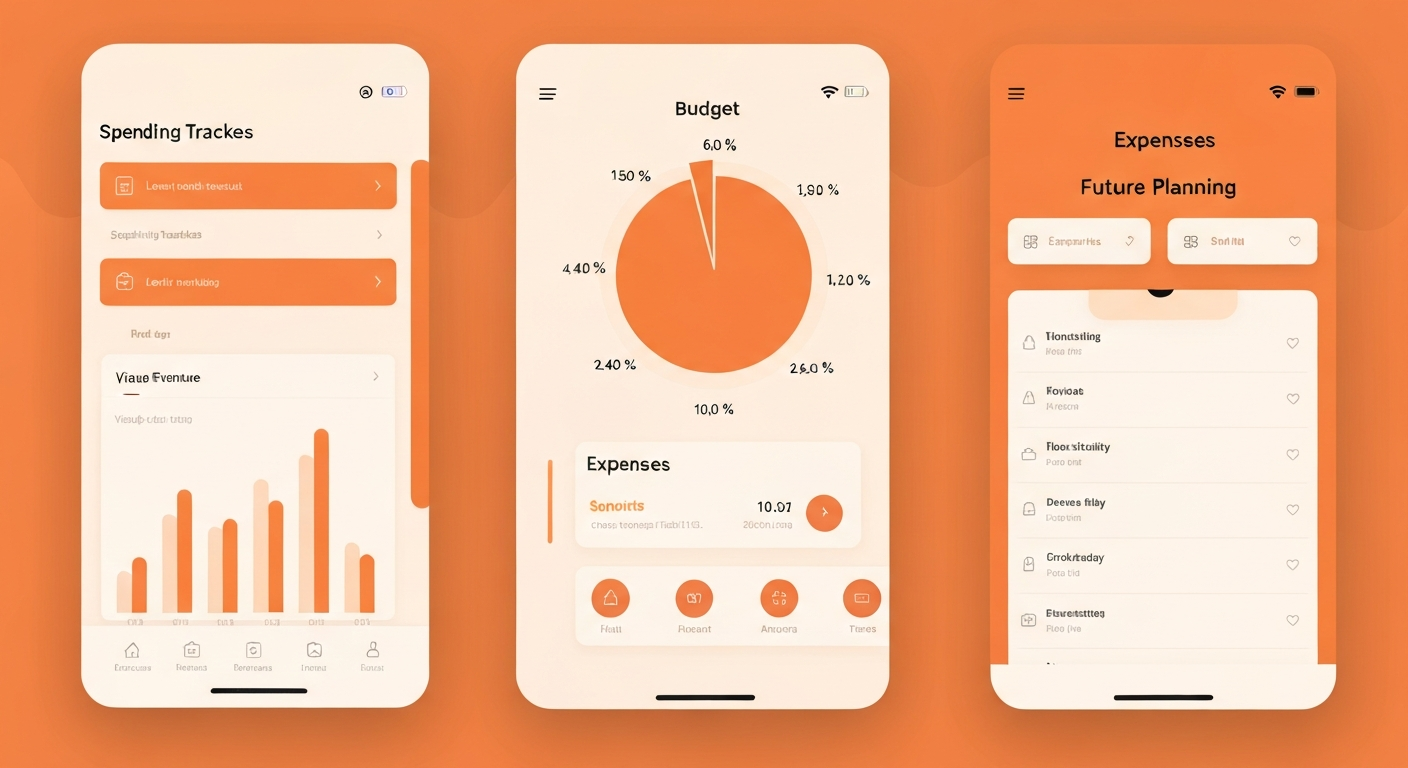
The average person tries 3.2 budgeting apps before giving up entirely. They download, configure, log expenses for a week, forget one weekend, feel guilty, and delete. The problem was never willpower — it was friction. The 2026 generation of AI budgeting apps finally changes this equation: they learn your spending patterns, predict upcoming expenses before you remember them, and work inside apps you already use — no extra downloads, no manual entry. The difference? They do the tedious work for you.
We tested the five most popular AI budgeting apps side by side for 30 days. Here are the ones worth your time in 2026 — no fluff, no affiliate rankings, just what we found.
Track spending on WhatsApp — no app download needed.
Send an expense via message and get instant AI-powered insights, budget updates, and savings tips — all in your favorite chat app.
Start free →What Makes a Budgeting App Truly "AI-Powered"
Before comparing specific apps, it helps to understand what AI should actually do in a budgeting context. Three capabilities separate real AI from cosmetic features:
Predictive cash flow. A genuine AI budgeting app does not just show where your money went. It forecasts where your money will go. By analyzing recurring charges, seasonal spending patterns (holiday shopping, summer travel), and even irregular expenses like annual insurance premiums, the app builds a forward-looking model of your finances. You see potential shortfalls weeks before they happen.
Automatic categorization that actually learns. Every app categorizes transactions. The difference is whether the system improves over time. If you keep recategorizing "Whole Foods" from "Shopping" to "Groceries" and the app still gets it wrong three months later, that is pattern matching, not AI. Real machine learning adapts to your corrections and eventually stops making the same mistakes.
Personalized recommendations. Generic advice like "spend less on dining out" is not intelligence. An AI budgeting app should notice that your electricity bill spikes every August (because you run the AC constantly), flag it proactively in July, and suggest adjusting your budget to absorb the increase without cutting into your savings goal.
Track your spending for free on WhatsApp
Start in 30 seconds — text an expense and get instant AI categorization, budget updates, and savings tips. No app to download.
Start free in 30 seconds →Ready to try AI budgeting?
Track spending on WhatsApp with zero setup. No app download, no bank linking — AI categorizes every expense instantly.
Start free →The Top AI Budgeting Apps for 2026
Try kNexo free — the AI budgeting app that works inside WhatsApp.
Start free →Track your spending on WhatsApp — Start free
No app download, no bank linking. AI categorizes every expense instantly.
Start free →1. kNexo
kNexo takes a fundamentally different approach by combining AI-driven insights with gamification mechanics. Instead of just tracking your spending, it turns financial progress into missions, challenges, and achievements. The AI engine analyzes your transactions to create personalized savings challenges that match your actual capacity, not arbitrary round numbers.
What stands out is the WhatsApp integration. You send an expense via message, and the AI categorizes it, updates your budget, and responds with your current status. No app to open, no manual entry. The family finance features let household members share progress without sharing every transaction detail, which solves a real tension point in joint budgeting.
Best for: People who have tried and abandoned traditional budgeting apps, families wanting shared financial visibility, anyone motivated by progress mechanics.

2. Monarch Money
Monarch has built a clean, comprehensive dashboard with solid AI transaction categorization. Their strength is account aggregation. They connect to more financial institutions than most competitors, giving you a genuine whole-picture view. The AI spending insights are useful, surfacing trends like "you spent 34% more on transportation this month than your three-month average."
The limitation is engagement. Monarch gives you the data but does not do much to keep you coming back. There is no reward system, no challenges, no social features. For disciplined budgeters who just need clean data, that is fine. For the majority of people who struggle with consistency, it leaves a gap.
Best for: Data-oriented budgeters who want comprehensive account views and do not need motivation features.
3. Copilot Money
Copilot offers one of the most polished interfaces in the category. The AI is particularly strong at identifying subscriptions you have forgotten about and flagging fee increases from service providers. The real-time net worth tracking is excellent.
The significant downside: it is iOS only. No Android, no web app. If you are in an Apple-only household, Copilot is worth evaluating. If anyone in your family uses Android, you need to look elsewhere. The lack of family or shared budgeting features also limits its usefulness for households.
Best for: iPhone users who want premium design and subscription management.
4. YNAB (You Need a Budget)
YNAB remains the gold standard for zero-based budgeting methodology. Their "give every dollar a job" philosophy has genuinely transformed how hundreds of thousands of people think about money. The community and educational content are unmatched.
However, YNAB has been slow to adopt AI. The app still relies heavily on manual entry (which they argue builds awareness), and there is no predictive modeling, no smart recommendations, and no gamification. At $14.99 per month, it is also one of the more expensive options for what is essentially a structured envelope system with bank syncing. If you want the discipline framework but also want AI doing the heavy lifting, YNAB alone may not be enough.
Best for: People who want a proven budgeting methodology and are willing to invest time in manual management.
5. Rocket Money (formerly Truebill)
Rocket Money gained popularity through its bill negotiation service, where they contact providers to reduce your rates. The AI spending analysis is decent, and the subscription tracking is thorough. They have added savings automation that moves money based on your spending patterns.
The AI here is more reactive than predictive. It tells you what happened rather than what is about to happen. The premium tier required for bill negotiation ($6-12/month plus a percentage of savings) can make the value proposition murky if your bills are already optimized.
Best for: People with multiple subscriptions and bills who want negotiation help alongside basic budgeting.
How to Choose the Right AI Budgeting App
The best app depends on what has caused your previous budgeting attempts to fail. If the problem was sticking to your budget, look for apps with engagement mechanics, notifications, and rewards. If the problem was not having a clear picture of your finances, prioritize account aggregation and dashboard quality. If budgeting felt too time-consuming, focus on automation and WhatsApp or messaging-based input.
Consider these factors in order of importance:
- Friction to log expenses. The fewer taps required, the more consistently you will use it. Messaging-based entry (like kNexo's WhatsApp feature) reduces friction to near zero.
- Quality of insights. Does the app tell you things you did not already know? Predictive alerts beat retrospective summaries.
- Motivation system. Gamification is not a gimmick when it keeps you engaged with your finances for months instead of days.
- Family support. If you share finances with a partner or family, shared features are essential. Separate apps for each person create blind spots.
- Price. An app that saves you hundreds per month is worth paying for, but free tiers should offer enough to prove value before you commit.
The Future of AI in Personal Finance
The trajectory is clear: budgeting apps are moving from passive tracking to active financial coaching. Within the next two years, expect AI assistants that negotiate bills on your behalf, automatically rebalance spending across categories when you overspend in one area, and predict major life expenses (car repairs, medical costs) based on patterns most humans would never notice.
The apps that combine this intelligence with genuine engagement mechanics, the ones that make you want to check in rather than dread it, will define the category. That intersection of AI capability and behavioral design is where the real innovation is happening.
Frequently Asked Questions
Are AI budgeting apps safe to connect to my bank accounts?
Reputable AI budgeting apps use bank-level encryption and connect through secure aggregation services like Plaid or MX. They use read-only access, meaning the app can view your transactions but cannot move money or make changes to your accounts. Always verify the app uses 256-bit encryption and check their security certifications before connecting.
Do AI budgeting apps work without connecting bank accounts?
Yes. Apps like kNexo allow manual entry via WhatsApp messages, meaning you can track expenses without ever linking a bank account. The AI still learns from your manual entries to provide insights and recommendations. However, connecting accounts does improve accuracy since you will not accidentally forget to log purchases.
How much do AI budgeting apps cost?
Prices range from free tiers with basic features to $15 per month for premium plans. Most apps offer a free trial period. The key is whether the app saves you more than it costs, which for most people, even a basic AI budgeting app will identify at least $50-100 in monthly savings opportunities through forgotten subscriptions, fee reductions, or smarter spending allocation.
Can AI budgeting apps help with debt repayment?
Several AI budgeting apps include debt payoff calculators and strategies. The AI advantage is that these tools can dynamically adjust your repayment plan based on your actual cash flow rather than using a static spreadsheet. When you have extra money one month, the app can recommend applying it to the highest-interest debt automatically.
Ready to try the #1 AI budgeting app?
Start free on WhatsApp — no app download, no bank linking. AI categorizes your expenses instantly.
Start free on WhatsApp →