How to Stop Impulse Buying: 5 AI-Powered Strategies That Actually Work
The average American spends $5,400 per year on impulse purchases. AI spending trackers are helping people break the cycle by detecting triggers, sending real-time nudges, and turning saved money into visible progress.
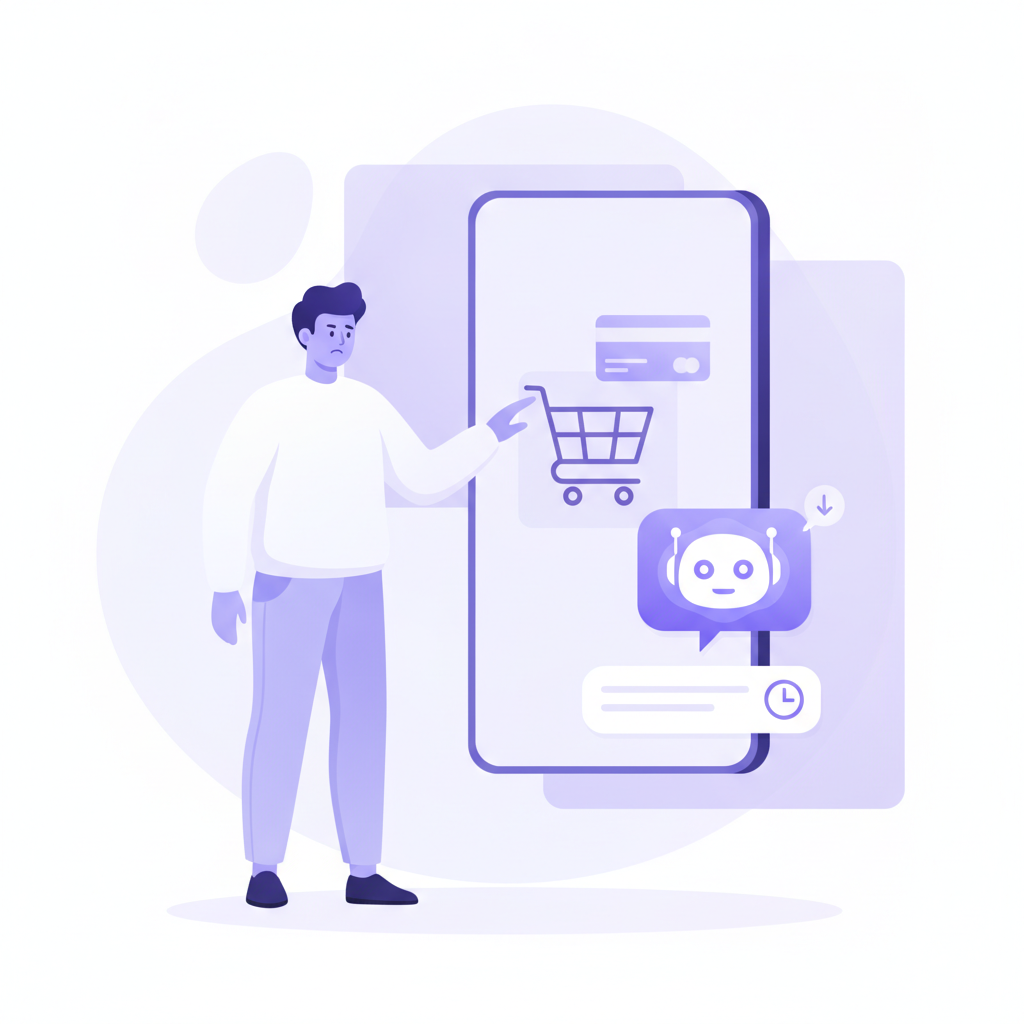
You told yourself it was just one thing. A pair of sneakers during a flash sale. A kitchen gadget from an Instagram ad. A premium app subscription at 2 AM because you couldn't sleep. Individually, each purchase felt small. But according to a 2023 Slickdeals survey, the average American spends $5,400 per year on impulse purchases — that is $450 every month leaving your account for things you did not plan to buy.
Traditional advice for how to stop impulse buying sounds reasonable: make a list, wait before you buy, unsubscribe from marketing emails. The problem is that willpower-based strategies fail at exactly the moment you need them most — when you are emotionally triggered, tired, or bored. That is where AI comes in. Instead of relying on self-control, AI spending trackers work in the background, analyzing your patterns and intervening at the right moment with data, not judgment. If you have been exploring ways to find hidden money leaks in your spending, impulse purchases are often the largest category hiding in plain sight.
Why Impulse Buying Is So Hard to Stop on Your Own
Impulse buying is not a character flaw. It is a predictable response to a set of well-documented psychological and environmental triggers. Understanding these triggers is the first step toward building defenses against them.
- Emotional spending. Research published by the American Psychological Association shows that stress, anxiety, and even boredom drive compensatory purchasing. You buy something not because you need it, but because the act of buying provides a temporary dopamine hit.
- FOMO and artificial urgency. "Only 3 left!" "Sale ends in 2 hours!" "Your cart expires soon." E-commerce platforms use scarcity cues and countdown timers to short-circuit rational decision-making. The perceived loss of missing a deal triggers faster, less considered purchases.
- Frictionless mobile payments. The Federal Reserve Bank of Boston found that digital payments increase spending compared to cash transactions. One-click checkout, saved credit cards, and Apple Pay have removed virtually all friction between wanting something and owning it.
- Doom-scrolling as a shopping trigger. Social media platforms serve algorithmically targeted product ads between content you already engage with. You open Instagram to look at photos, and 20 minutes later you have bought a weighted blanket you did not know existed five minutes ago.
- Decision fatigue. After a long day of making decisions at work, your self-regulation capacity is depleted. Evening and late-night hours are peak impulse buying windows — and online stores are always open.
Knowing your money personality type can help you identify which of these triggers affect you most. But knowing your triggers and resisting them in real time are two very different things. That gap is exactly what AI fills.

5 AI-Powered Strategies to Stop Impulse Buying
1. Real-Time Spending Alerts via WhatsApp
The most effective intervention happens at the moment of purchase, not during a monthly budget review when the money is already gone. AI spending trackers like kNexo send real-time WhatsApp notifications when spending spikes or deviates from your normal patterns.
Here is how it works in practice: you log a $89 purchase at an online clothing store. Within seconds, kNexo sends you a WhatsApp message showing that you have already spent $340 on clothing this month, which is 67% above your typical monthly average for that category. It does not tell you to cancel the purchase. It just shows you the data.
This is not accidental. Behavioral economics research consistently shows that awareness of spending context is more effective than restrictions. When you see that one purchase in the context of your monthly pattern, the desire to buy often deflates on its own. The WhatsApp delivery channel matters too — you see the alert immediately, in a messaging app you check dozens of times per day, rather than buried in a finance app you open once a week.
2. AI Pattern Detection — Spotting Your Triggers Before You Do
Most people think their impulse buying is random. It is not. AI pattern detection reveals that your unplanned spending follows highly predictable rhythms.
After analyzing 30-60 days of your transaction history, AI identifies patterns like:
- You spend 3x more on online shopping between 9 PM and midnight on weekdays
- Your food delivery spending spikes on days when your calendar shows back-to-back meetings
- You make $50+ impulse purchases within 48 hours of payday
- Your Amazon spending increases 40% during the first week after a stressful period at work
Once the AI maps these patterns, it can intervene proactively. Instead of reacting after you have already spent the money, it sends a heads-up: "Based on your history, you tend to spend more on online shopping tonight. Your savings goal is $120 away from the next milestone. Keep going?" That kind of contextual, personalized nudge is something no static budget spreadsheet can deliver. For more ways AI surfaces spending insights you would miss manually, see AI money prompts that help you save.
3. The 24-Hour AI Hold — Automated Waiting Period
The 24-hour rule is one of the oldest anti-impulse-buying strategies: before making any non-essential purchase, wait a full day. The problem is that nobody actually does it consistently. The purchase desire feels urgent in the moment, and the rule requires you to remember and enforce it yourself.
AI automates this entirely. When you log a purchase that the AI categorizes as potentially impulsive — based on the category, amount, time of day, and your historical patterns — it flags it and sends a follow-up message 24 hours later:
"Yesterday you were considering a $65 purchase at [store]. You've slept on it. Still want it? If you skip it, that $65 moves you to 85% of your emergency fund goal."
Research from the Journal of Consumer Psychology shows that purchase desire decreases by 50-70% after a 24-hour delay for non-essential items. The AI does not need willpower. It just needs a timer and your spending data.
4. Gamified Savings Goals That Redirect Impulse Energy
Impulse buying is partly driven by the dopamine reward of acquiring something new. Suppressing that urge entirely is exhausting and unsustainable. A smarter approach is redirecting the energy: instead of buying a thing, you "earn" progress toward a goal.
AI-powered gamification works by turning every resisted impulse purchase into visible progress:
- Skip the purchase, feed the goal. When you decide not to buy something after an AI nudge, the amount gets added to a virtual savings tracker. You see your emergency fund, vacation fund, or debt payoff goal fill up in real time.
- Streak tracking. "You have gone 12 days without an unplanned purchase over $30. That is your longest streak this quarter."
- Achievement badges. Milestones like "Saved $500 from skipped impulse purchases" or "30-day impulse-free streak" create the same psychological reward loop that buying used to provide.
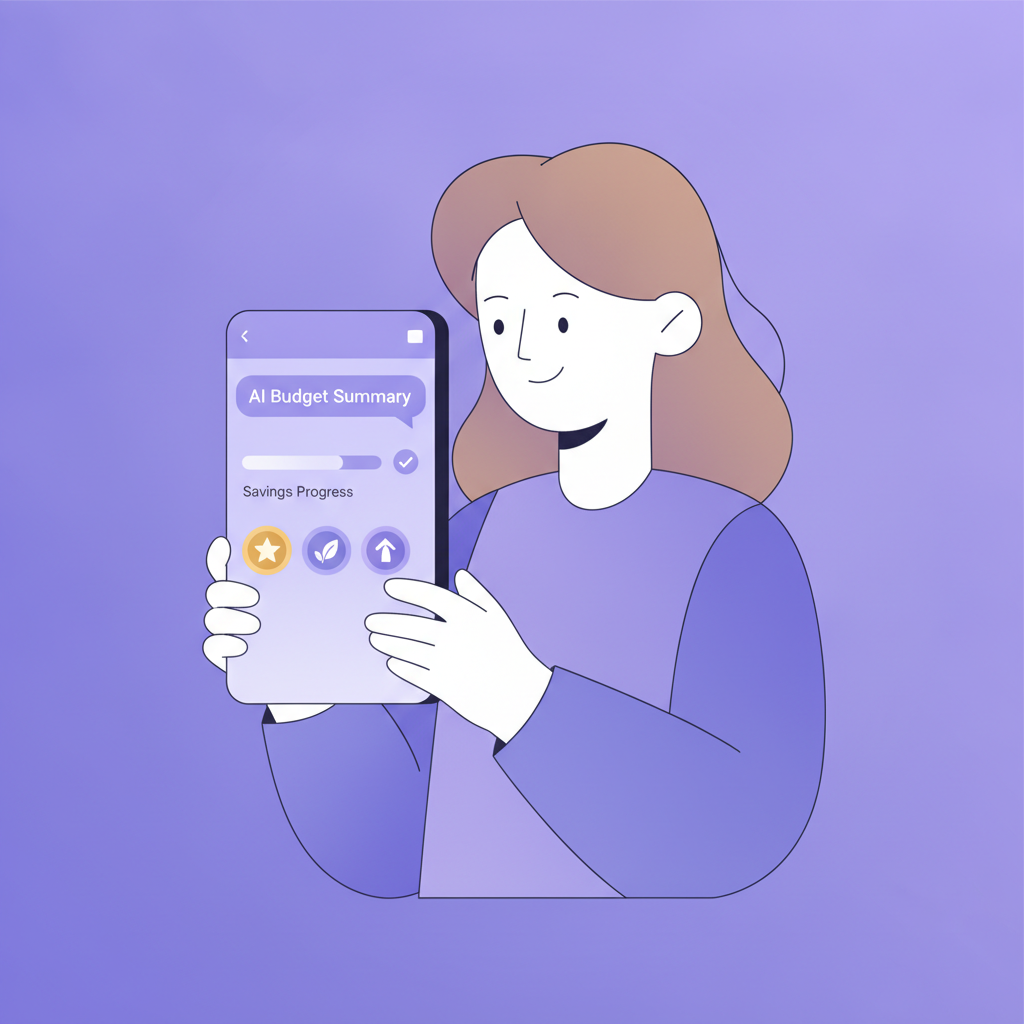
- Progress visualization. Seeing a savings bar go from 60% to 72% after skipping one unnecessary purchase is a concrete, immediate reward — something a budget spreadsheet never provides.
The key insight is that you are not depriving yourself. You are replacing one reward (buying) with another (progress). AI makes this work by calculating the exact dollar impact of each skipped purchase and showing it to you instantly.
5. Weekly AI Spending Audits That Show Where Impulse Money Went
Even with real-time alerts and nudges, some impulse purchases will get through. That is normal. The goal is not perfection — it is a downward trend. Weekly AI spending audits make that trend visible.
Every Sunday, the AI generates a breakdown of your week:
- Total impulse spending — flagged purchases that deviated from your planned budget or historical norms
- Category breakdown — where the money went (food delivery, online shopping, in-app purchases, subscriptions)
- Trigger analysis — what time, day, and context most of your impulse purchases occurred in
- Week-over-week trend — are you spending more or less on impulse buys compared to last week?
- Money redirected — how much you saved by acting on AI nudges during the week
This weekly rhythm creates accountability without the shame of a traditional budget review. The AI is not judging you. It is showing you data. And over time, that data shapes behavior more effectively than any resolution or willpower trick. If you are looking for a structured approach to pair with these audits, our guide on how to stick to a budget covers complementary strategies that work well alongside AI tracking.
How kNexo Helps You Stop Impulse Buying
kNexo implements all five of these strategies inside a single WhatsApp conversation. There is no separate app to download, no dashboard to remember to check, and no complex setup process.
- WhatsApp-native. Every alert, nudge, insight, and weekly summary arrives in WhatsApp — the messaging app most people already check 80+ times per day. No friction, no forgotten app.
- AI categorization. kNexo automatically categorizes every transaction and flags impulse-pattern purchases based on your personal spending history, not generic rules.
- Gamified progress. Savings goals, streaks, and achievement badges turn impulse resistance into a visible, rewarding experience.
- No bank connection required. You can log expenses manually via a quick WhatsApp message. The AI works with whatever data you give it — you do not need to hand over your bank credentials to get started.
- Free to start. The Free tier includes unlimited transaction tracking, AI categorization, daily missions, and full reports. For advanced features like kNexo Copilot and Smart Insights that power deeper pattern detection, the Pro plan is $19.90/month billed annually.
If impulse spending is costing you $5,400 per year, even a 30% reduction means $1,620 back in your pocket — money that can go toward an emergency fund, a vacation, or paying off debt. And unlike willpower-based strategies that fade after the first stressful week, AI-powered tracking gets smarter the longer you use it. Your recurring charges and impulse patterns all become part of a spending profile that improves every month.
Frequently Asked Questions
How much money does impulse buying cost the average person?
According to a 2023 Slickdeals survey, the average American spends approximately $5,400 per year on impulse purchases. That breaks down to about $450 per month spent on unplanned items. An AI spending tracker can identify these patterns and help reduce impulse spending by 30-50% within the first few months of use.
Can AI really help stop impulse buying?
Yes. AI spending trackers analyze your transaction history to detect impulse buying patterns — specific times of day, emotional triggers, and product categories where you overspend. By sending real-time alerts before or immediately after an unplanned purchase, AI creates a feedback loop that makes you more aware of habitual spending. Behavioral research shows that awareness alone reduces impulsive behavior by up to 40%.
What is the 24-hour rule for impulse buying?
The 24-hour rule is a behavioral finance strategy where you wait at least 24 hours before completing any non-essential purchase. Research from the Journal of Consumer Psychology shows that purchase desire decreases significantly after a delay period. AI tools automate this by sending a nudge to wait, then following up the next day to ask if you still want the item.
What triggers impulse buying?
The most common impulse buying triggers include emotional states (stress, boredom, sadness), environmental cues (flash sales, limited-time offers, social media ads), ease of payment (one-click checkout, saved credit cards), and social pressure. The Federal Reserve Bank of Boston found that digital payment methods increase impulse spending by 20-30% compared to cash.
What is the best app to track and stop impulse spending?
kNexo is a free AI-powered finance tool that works directly inside WhatsApp — no separate app to download. It tracks spending in real time, detects impulse buying patterns, sends proactive alerts, and uses gamified savings goals to redirect impulse energy. The WhatsApp-native approach means notifications reach you where you already are.
Stop losing $5,400 a year to impulse buying.
kNexo's AI detects your spending triggers, sends real-time nudges, and turns saved money into visible progress — all inside WhatsApp. Free forever, no credit card.
Create free account